

Physical & Sexual Intimacy
When closeness starts to feel complicated.
Physical and sexual intimacy can be an important way couples experience connection, affection and feeling wanted by one another.
But intimacy doesn’t always come easily. Desire can change, touch can become loaded, and conversations about sex can quickly turn into hurt, rejection or avoidance.

Couples therapy can help you understand what is happening underneath these patterns and rebuild intimacy in a way that feels safe, mutual and meaningful for both partners.

When partners experience desire differently.
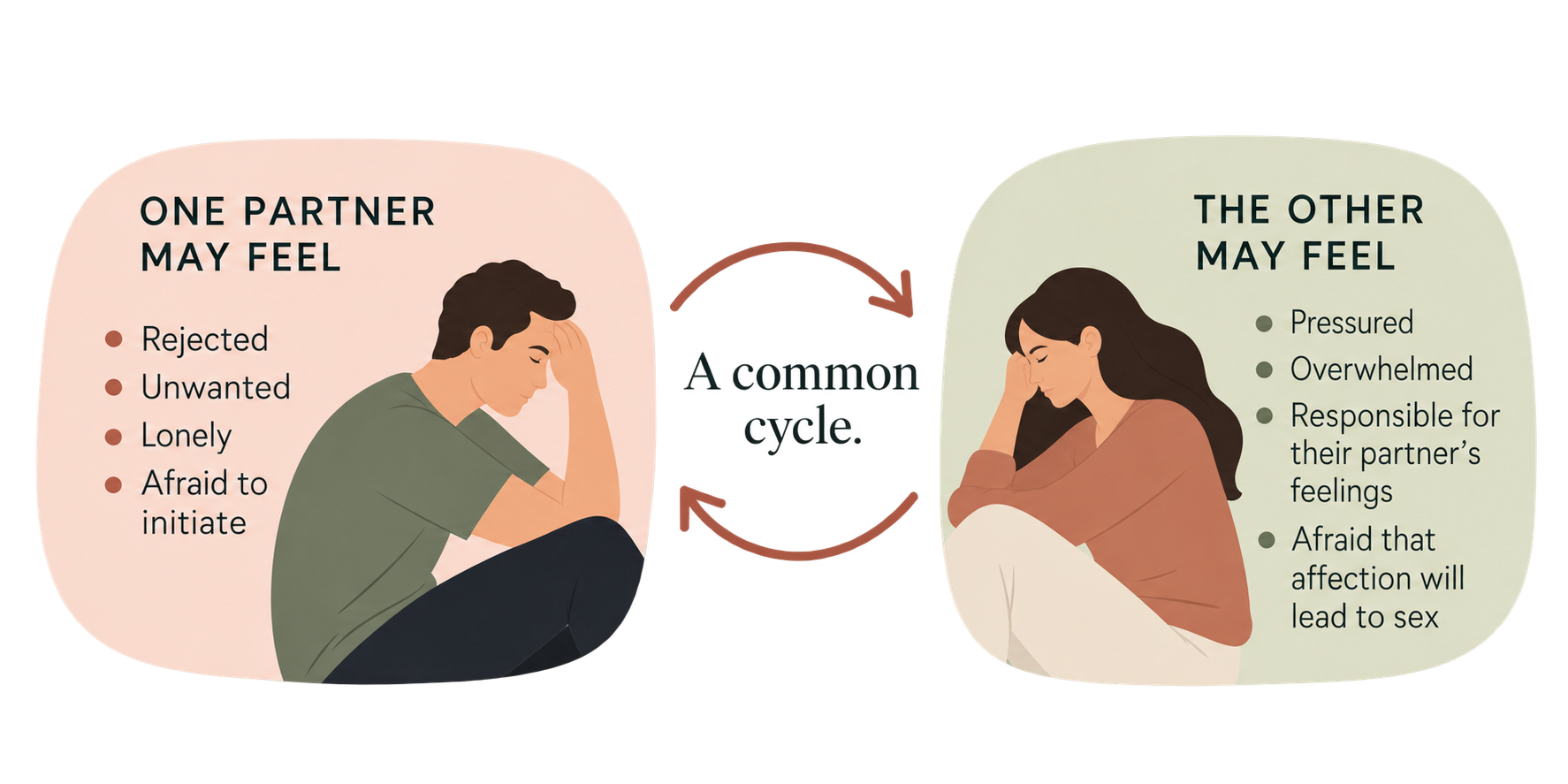
It’s very common for two people in a relationship to want different amounts of sexual connection. The difficulty often isn’t the difference itself. It’s the cycle that develops around it.
Neither partner necessarily wants distance, but over time, both can begin protecting themselves in ways that create even more of it.
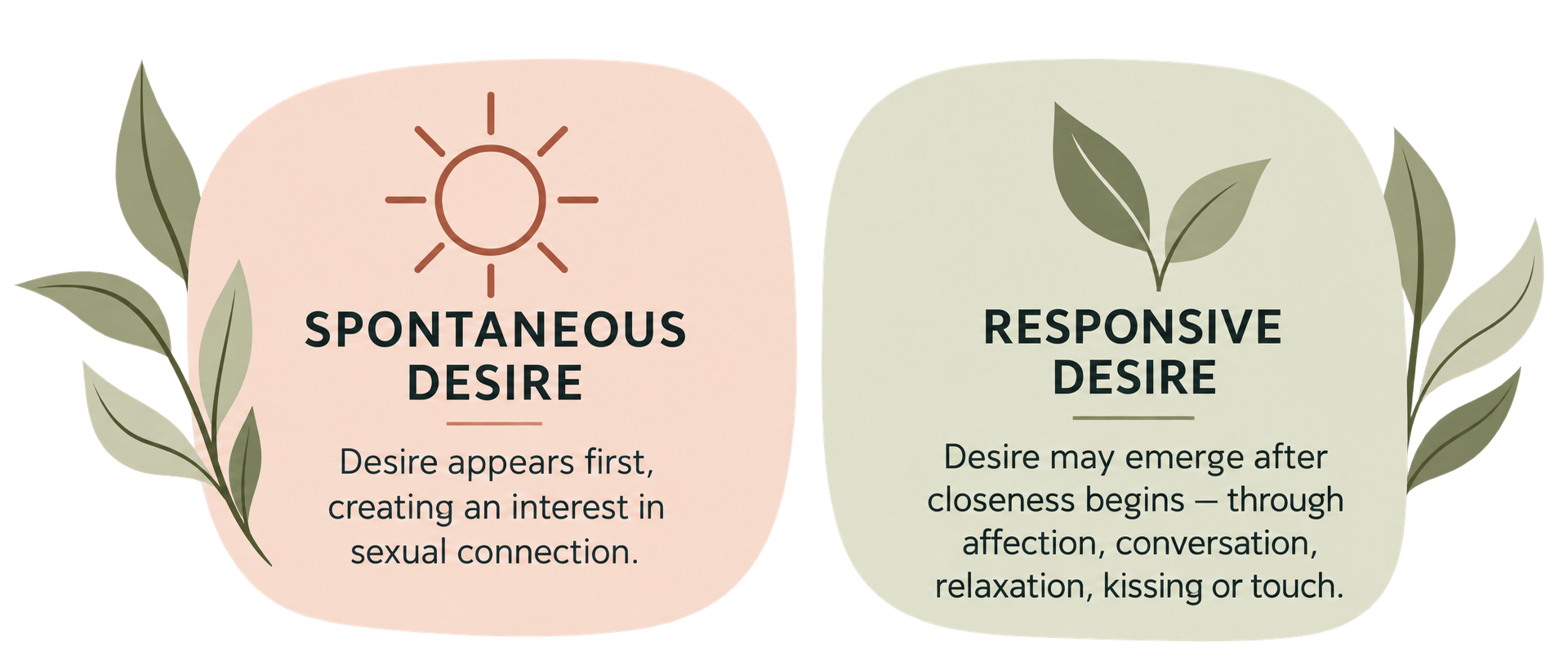
Desire doesn’t always happen before intimacy.
Not everyone experiences desire in the same way. Understanding how you and your partner experience desire can take some of the confusion and personalization out of intimacy.

Instead of asking:
Why don’t you want sex?
we can begin asking:
What helps you access desire?
When touch starts to feel loaded.
Sometimes couples stop touching because affection has developed an unspoken expectation.
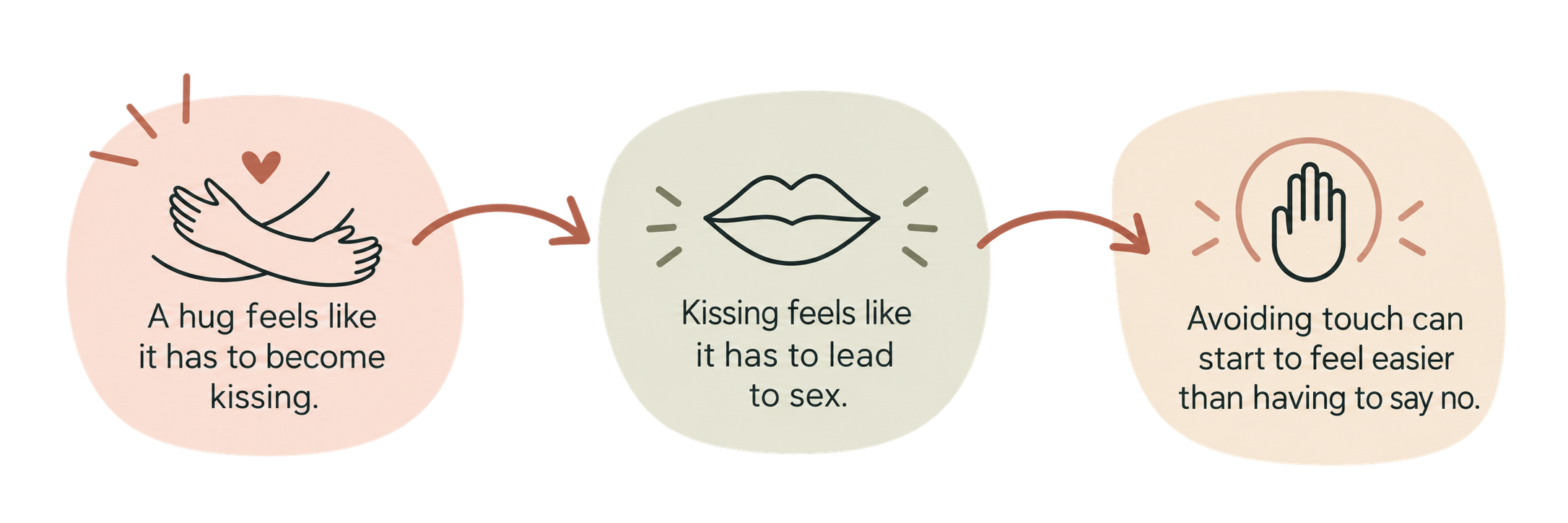
Rebuilding intimacy can mean creating opportunities for affection without an expectation about where it needs to lead.
Touch can simply be touch.
Couples Therapy for Physical & Sexual Intimacy in Ontario
At Ember Relationship Psychology, we offer virtual couples therapy for clients across Ontario to help you better understand your patterns and create a physical and sexual relationship that feels connected and mutual.

Building intimacy that works for both of you.
Sexual intimacy isn’t just about frequency. It’s about whether both partners feel wanted, safe, respected and able to communicate openly about their needs.
Couples therapy can help you work through:
Differences in desire
Feeling rejected or pressured
Loss of affection
Difficulty initiating
Sexual communication
Stress and mental load
Parenting and exhaustion
Pregnancy and postpartum changes
Emotional disconnection
Intimacy after betrayal